Search This Blog

Thursday, 5 November 2015

“The green dark forest, too silent to be real.”


I have had several occasions in the last couple of weeks to reflect on this line from “The  Canadian Railroad Trilogy” by my favourite Canadian folksinger/troubadour, Gordon Lightfoot.  I don’t think I ever asked him about this line - I did interview him once when I was in university, but that is another story  -  but I suspect it refers to the idea that the modern Western world we live in is too often too full of noise. Yet, that is our reality. Then, if we do get to go to the forest, it seems in contrast “too silent to be real.”

I have been wandering through (and wondering in) the forests since my childhood in northern Manitoba. I have to thank my parents for giving us the freedom to do so for hours at a time. Sometimes I did so with my brothers or friends, but often alone. In the latter situation, I became particularly fascinated with birdwatching and finding and repeatedly keeping an eye on their nests. Of course, if there were birds to see there were songs to hear.

Nowadays Lightfoot’s prescient line has taken on a new meaning for me. One can walk for hours in a West Coast rain forest, in the Rockies, or here in the Québec Laurentians, where I am this week, with scarcely hearing a bird. This phenomenon has been noticed by others and attributed to a worrisome decline in songbird population in North America. Some of this  appears to be due to the excessive use of herbicides and pesticides which have negative effects on reproduction when worked into the food chain. Another factor is likely the downright destruction of their habitat, not only here where they nest, but throughout the continent where they migrate south end need to feed en Route and where they spend their winters. Believe it or not, some also contend that not only the excessive numbers of feral cats but also your beloved household kitty whom you let out to run freely, kill a lot more birds than you realize. 

So, if you care for our bird population, if you appreciate their songs in the morning, and own a cat, do not let it out without a bell. Better still, only take it out on a leash if you wish to give it exercise beyond the confines of your home. Cut down on or eliminate the use of herbicides and pesticides. Indeed, many of our jurisdictions have begun to enact bylaws against their use within their boundaries. The Canadian Association of Physicians for the Environment, of which I’m a member, has been a strong lobbyist in this regard.   

We might not be able to do much about these factors and destruction of habitat beyond the bounds of our nation.  However, some of it refers to our exploitation of so-called Third World or developing nations’ peoples and lands for our own benefit. We have become used to imported, inexpensive, fruit, vegetables and even flowers, all of which require removal of natural habitat to be supplanted by gardens, orchards and plantations to provide our needs. Another reason to look more closely at the use of resources and foodstuff that have their origins near at hand, e.g. the hundred-mile diet.

Meanwhile, other voices in our world are telling us how much we need the green dark forests, not to mention all the fauna that inhabit them. There has even been research showing that those who take breaks from their work routine that include walks in the park function better in their offices subsequently than those who stayed at their desks or went to the staff room. Another study reported that schoolchildren who were bussed through treed areas and past parks also functioned better than those who were bussed through the more typical urban concrete. Indeed, educators and even mental health therapists who promote mindfulness both realize that we need to get back in touch with nature. The phrase, “Nature Deficit Disorder”, has even been coined.

As a Christian, this takes me back to the beginning, as The Bible Describes it. Besides being told to “multiply and replenish the earth,” to use the familiar old King James language, at least to those of us in my age and older, we were also told to “subdue and have dominion” over the earth. Unfortunately, increasingly with the industrialization of our society in the last few centuries, this has been interpreted as supporting the over-utilization and exploitation of the earth’s resources. We have interpreted this as giving us permission to control nature


Now some of us followers of The Way are realizing anew that there is  is another way to understand these passages. We are meant to look after the Earth as a gardener tends his garden, which is obviously the way God spoke to Adam about his role as a human on this planet. Good gardeners know how to “replenish the earth” by using age-old manual methods of controlling vegetation and returning plant material back to the earth. This is doing on a small scale what we need to do on a larger scale when it comes to ventures such as mining and forestry. The new slogan for this is Creation Care. The last several decades’ awakening to the realities of climate change and humanity’s contribution to it has only further fuelled (pardon the pun) the need for us to change our approach from exploitation of the land to caring for it. Let’s do it.  As another slogan has it, “It's the right thing to do.”

Wednesday, 4 November 2015

Our new government

GOVERNMENT OF CANADA CABINET MEMBERS 2015 11 4

This is the 29th Cabinet Ministry under the 23rd Prime Minister, drawn from a majority representation of 184 of 338 Members of Parliament in the election of October 19, 2015. I spent a good deal of time today watching the swearing in ceremony and making notes. I have never been so concerned about an election and its results as this one. There is a lot at stake here for the future of Canada. As I reflected on all the changes in the last 2 weeks I realized that, in the words of Joni Mitchell, “You don’t know what you’ve got till it’s gone.” We had grown complacent about what Canada was and where it was going. Governments changed in the last 75 years or so but not much really changed about Canadian fundamentals. Even the Progressive Conservatives were still invested in the Canada we all thought we know and valued. Then car the Conservatives minus the progressive and we saw how a majority government with an extreme agenda could so quickly dismantle what had been billing for over 100 years. The Conservatives tried to make a lot of the support they had but it obviously wasn’t what the majority of Canadians who voted wanted. Now, hope for our nation has returned.

So, here is ‘the list’ of the new Government of Canada cabinet. The order came from the site from which it was copied but the numbers following in parentheses are the sequence with which the ministers were sworn in. My hunch is that was a totally randomly selected sequence as I could determine no rhyme or reason for it, but maybe I did not give that enough thought. The notes following come from comments made during the event or from Wikipedia or other  on-line sources. 

After the list I have made note of some categories and also copied a map of representation from the web. 

  1. (1) Justin Trudeau (Quebec) - Prime Minister, Intergovernmental Affairs and Youth. 
Previously MP and leader of the Liberal party, now PM at age 43, son of former Liberal 
      PM PE Trudeau who became PM in 1968 at age 49.
  1. (2) Ralph Goodale (Saskatchewan) - Public Safety and Emergency Preparedness. First elected in 1974; in previous cabinet(s) and now in 4 committees. Committed to Restorative Justice.
  2. (4) Lawrence MacAulay (P.E.I.) - Agriculture and Agri-Food. First elected in 1988.
  3. (6) Stéphane Dion (Quebec) - Foreign Affairs. Previous Liberal leader and cabinet minister; first elected in 1996.
  4. (8) John McCallum (Ontario) - Immigration, Citizenship and Refugees. Privy Council member. 
  5. (3) Carolyn Bennett, MD (Ontario) - Indigenous and Northern Affairs; first elected in 1997. Has done a lot of medical work among First Nations in No. Ont. Former Minster of State for Public Health. She was chair of the Canada-Israel Friendship Group from 1999 to 2003 and is a member of Liberal Parliamentarians for Israel.
  6. (9) Scott Brison (Nova Scotia) - Treasury Board President. Former Conservative but then Liberal Cabinet Minister after crossing the floor in 2003; married gay with children with his partner. First elected 1997.
  7. (11) Dominic Leblanc (New Brunswick) - Leader of the Government in the House of Commons. First elected in 2000, born in Ottawa, Ontario, son of Roméo LeBlanc, former Governor General. As a child, he baby-sat Justin, Alexandre, and Michel Trudeau, the children of then-Prime Minister Pierre Trudeau. He has remained friends with Justin Trudeau, and endorsed his candidacy for Liberal leader in 2012.[4] He earned a Bachelor of Arts degree in political science from the University of Toronto (Trinity College), a Bachelor of Laws degree from the University of New Brunswick, and then attended Harvard Law School, where he obtained his Master of Laws degree. Now in 6 committees, chairing one.
  8. (13) Navdeep Bains (Ontario) - Innovation, Science and Economic Development. Law professor, MBA, CMA; first elected 2004. Carried his child out of Rideau Hall.
  9. (15) Bill Morneau (Ontario) - Finance Minister. Millionaire head of HR firm who is a retirement and pension expert.
  10. (5) Jody Wilson-Raybould (Granville - B.C.) - Justice and Attorney General of Canada. Vancouver lawyer, former Crown Prosecutor and Regional AFN chief.
  11. (7) Judy Foote (Newfoundland and Labrador) - Public Services and Procurement. First elected in 2008.
  12. (19) Chrystia Freeland (Ontario) - International Trade. Mother of 3; carried one out of Rideau Hall. Committee Chair, first elected in 2013, former Financial Times editor with Harvard and Oxford credentials. Ukrainian origin supporting Ukraine so strongly, as did mother, receiving Putin’s censure for the same.
  13. (10) Jane Philpott, MD (Ontario) - Health. Worked extensively in West Africa where she lost a daughter.  She attends the Community Mennonite Church in Stouffville, Ontario where she is a respected hard-working member and song leader for the congregation.
  14. (17) Jean-Yves Duclos (Quebec) - Families, Children and Social Development.
  15. (20) Marc Garneau (Quebec, Westmoount-Ville Marie) - Transport - out-of-this world [former astronaut], first elected in 2008.
  16. (12) Marie-Claude Bibeau (Quebec) - International Development and La francophonie. Involved with CIDA. 
  17. (21) Jim Carr (Manitoba; Wpg. South Ctr.) - Natural Resources. MB Liberal. 
  18. (14) Mélanie Joly (Quebec) - Heritage. Lawyer who ran for mayor of Montreal.
  19. (16) Diane Lebouthillier (Quebec, Gaspe) - National Revenue. Mother and grandmother. 
  20. (24) Kent Hehr (Alberta, Calgary) - Veterans Affairs, and Associate Minister of National Defence. Lawyer, paraplegic and former CPA head; first Liberal in Calgary since 1968.
  21. (18) Catherine McKenna (Ontario) - Environment and Climate Change. Toronto lawyer.
  22. (26) Harjit Sajjan (B.C.) - National Defence. Lt.Col.who served 3 times in Afghanisan and once in the former Yugoslavia; former VPD member and aide-de-camp to former Liberal cabinet minister from BC, Iona Campognolo.
  23. (22) MaryAnn Mihychuk (Manitoba, Kildonan-St. Paul) - Employment Workforce Development and Labour. Ukrainian origin, former MB NDP cabinet minister.
  24. (28) Amarjeet Sohi (Alberta, Edmonton) - Infrastructure and Communities. Former city councillor.
  25. (23) Maryam Monsef (Ontario, Peterborough) - Democratic Institutions. Afghani immigrant 20 yrs. ago. Ist Liberal in riding since 1975.
  26. (25) Carla Qualtrough (B.C., Delta) - Sport, and Persons with Disabilities. Visually-impaired lawyer, Paralympics competitor who defeated Kerri-Lynn Findlay of the Conservatives.
  27. (30) Hunter Tootoo (Nunavut) - Fisheries and Oceans, and Canadian Coastguard. Former long-time mayor of Iqaluit, Speaker of the Nunavut Territorial Assembly.
  28. (27) Kirsty Duncan (Ontario, Toronto) - Science. PhD with education and experience in medical geography, an influenza epidemic expert, UT professor who served on the Intergovernmental Panel on Climate Change, an organization that won the 2007 Nobel Prize with Al Gore.
  29. (29) Patricia Hajdu (Ontario, Thunder Bay) - Status of Women. Expert on issues of drug and alcohol abuse who has worked a lot in N. On. and run a womens’ shelter. Won buy a narrow recount. She obtained a Masters of Public Administration from the University of Victoria.
  30. (31) Bardish Chagger (Ontario, Kitchener-Waterloo) - Small Business and Tourism. Multicultural activist.

Category breakdown
Females (15) - fulfilling a campaign promise of 50% female representation “because it’s 2015,“ as Trudeau said after the swearing in of the new cabinet ministers. This out of 88 female MPs altogether, the most ever elected. Harper had 10 females in his last cabinet of 38. There will be 7 males and 4 females on the central council

Indigenous (2): Jody Wilson-Raybould, Hunter Tootoo   

Disabled (2): Kent Hehr,Carla Qualtrough

Former ministers (5):
Stefane Dion, Ralph Goodale, John McCallum, Carolyn Bennett [Jr.], Scott Brison

Regional Representation:
Maritimes (4): Lawrence McAulay [PEI], Scott Brison [NS], Dominic LeBlanc [NB], Judy Foote [NFL]
Quebec (7, 4  from greater Montreal): Justin Trudeau [MTRL], Stephane Dion [MTRL], Marie-Claude Bibeau, Melanie Joly [MTRL],, Diane Lebouthillier, Marc Garneau [MTRL], Jean-Yves Duclos [Q City]
BUT no so-called Quebec Lieutenant in this government as opposed to in many previous administrations.  
Ontario (11, 7 from greater Toronto): Bill Morneau [TO], Carolyn Bennett [TO], Catherine McKenna [TO], Chrystia Freeland [TO], John McCallum [TO], Jane Philpott, Navdeep Bains [TO], Maryam Monsef, Kirsty Duncan [TO], Patricia Hajdu, Bardish Chugger
The West (): Jody Wilson Raybould, Ralph Goodale [SK], James Carr [MB], Maryann Mihychuk [MB], Kent Hehr [AB], Carla Qualtrough [BC], Harjit Sajjan [BC], Amarjeet Sohi [AB]

Punjabi (4 out of 20 elected): Harjit Sajjan [BC], Amarjeet Sohi [AB], Bardish Chugger [ON], Navdeep Bains [ON]

But no Chinese - too bad; too many new immigrants voted Conservative and many Canadian-Chinese vote NDP.

Wednesday, 26 August 2015

CF – BHS & I

In the summer of 1968, when I was visiting my parents at Meadow Lake, Saskatchewan, where they had moved to from Winnipeg year earlier, we took an evening drive out to the lake. There were some seaplanes at the dock there, including a Norseman and a Cessna 180. My father looked at the Norseman and said to me, "That is the one you rode on when you were a baby."


I am not sure if I had heard the story before, but I have certainly heard it since, most notably from my mother's father, Grandpa Frank F Enns. He felt he had to tell me it when I was doing a video-taped interview of him near the end of his life.

My parents were working as a missionary couple, a young minister and his wife if you will, for the United Church of Canada in Oxford House, Manitoba, where they were stationed from 1945-1947. In the late summer of 1946, my mother made her way to her parents' place on the farm where she had grown up in the Burwalde District north of the town of Winkler, Manitoba. After I was born and deemed old enough to travel, my grandfather took my mother and myself by train to what was then the end of the railroad at The Pas. This was where Tom Lamb would fly us out of to join my father in Oxford house.

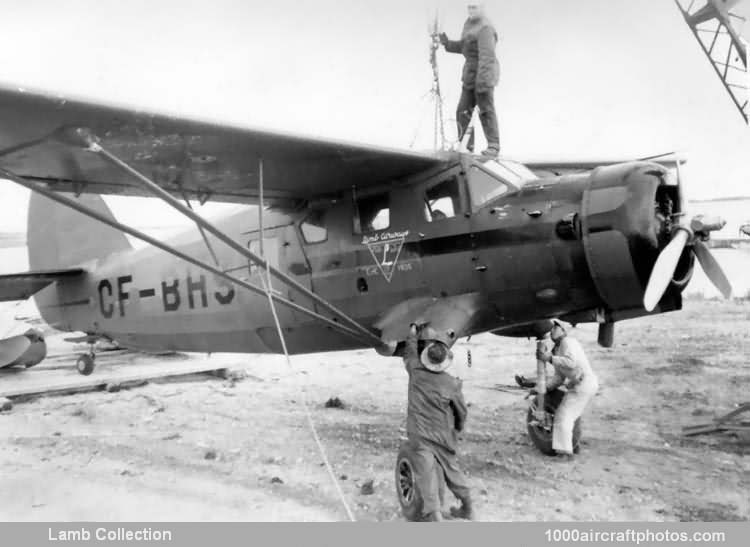
I can re-check the details but it seems to me there were 2 problems. This was early December. It was what we in the north called "freeze-up." It was the time of year between when you could land on the lake with pontoons and when you could safely land on it with skis. So, in part we were stuck in The Pas waiting for the ice to be strong enough to land on. However, I think we may have been delayed to that point because of mechanical problems with the plane. The plane was the Nordouyn Norseman CF-DHS.

In any case, it wasn't until December that we took off from The Pas. For some reason it was late in the day, which is short there at that time of the year in any case, and we needed to make a landing in Norway House. Perhaps we had goods to unload or people that were destined for that location as well. In any case, it was really getting rather dark as we circled to land. The pilot thought he saw the strip on the ice which we were to land on, as there were evergreen branches on both sides of it. This was a common way of marking landing strips on snow-covered lakes in the north. However, again, in the deepening blue of the snow in the rapidly fading light, he could see figures running back and forth across the strip brandishing what appeared to be burning torches. There was nothing to it but to land somewhere else nearby.

Then the pilot and his passengers learned the awful truth. Those evergreens were to mark out where the locals had just made their first cutting of ice for fish preservation. If we had landed there, we would have gone straight through into the freezing waters.

I suspect this story meant so much to my grandfather because, not only was it an account of how his daughter and grandson were saved a possible death. It possibly also indicated to him, man of faith that he was. that we were destined for more.

In any case, it was not until my late 60s when I was thinking about my past and looking into aircraft that have been part of it, that I discovered more of the history of this aircraft.

Here’s a snapshot of its history:

New from the factory, the aircraft was registered as CF-BHS to Tom Lamb of Lamb Airways of The Pas, Manitoba, Canada, on October 4, 1945. Twenty-one years later, on May 16, 1966, the aircraft was sold to G.M. Clark and John F. Midgett of Meadow Lake, Saskatchewan, It was reregistered to C and M Airways of La Loche, in 1971, while on September 28, 1989 it was registered to La Loche Airways.

While taxiing on Cree Lake on October 11, 1989, fire broke out and the aircraft was beached on Prowse Island and subsequently damaged beyond repair by the fire. The registration was cancelled on April 4, 1990. Eighteen years later its remains had been rebuilt to static display in the colours of Lamb Airways and on June 28, 2008 unveiled on a pedestal in the Lions Park, Thompson, Manitoba, to commemorate the bush plane and their bush pilots, especially Tom Lamb.


And here's Tom Lamb receiving it from the factory a short while earlier:
Loading Image
Lambair has their own website at:

 
At the top of their website is a picture of Tom and his sons Greg, Jack, Don, Dennis, Conrad (youngest), etc. Some of these names I remember well from my childhood in Grand Rapids, Manitoba [1948-1957]. By that time, Tom’s sons were already flying with him. The early Norsemen and Beavers were being augmented by smaller, faster, more modern Cessna 170 and 180s.


Their history is summarized on their website:

Lambair, which was incorporated in 1935 as Lamb Airways Limited, began with one aircraft - a Stinson SR8 five passenger plane. This plane was used to haul fish from The Pas, Manitoba to the rail head at Cormorant before the fish froze and before the market fell in Chicago. Tom Lamb, who established the airline, bought the Stinson in 1930 and taught himself to fly it.

Lambair grew from public demand, as there was no other means of transportation for fish to market at the time except horse-drawn sleighs. Airplanes shortened the time to market and ensured higher quality fish to the large North American market. While transportation of fish, fur, trappers and fisherman were its primary business, the largest expansion of Lambair was during the construction of the mid-Canada line during the 1950's. The airline served all of Canada and parts of the United States and Greenland during its years in service. Lambair continued to haul fish, but its primary cargo was people - Inuit families from Resolute, Northwest territories to the far Arctic island hunting camps; equipment - oil drilling rigs to Sable Island from Halifax and food supplies. Medical evacuations and emergency mercy flights also accounted for a substantial amount of the company's traffic from the far north.

I still remember one of those "mercy flights." Again, it was "freeze-up." Some of the men of the community, my father included, had gone out to begin to cut their wood supply for the winter before the snow got too deep and made it more difficult to call their loads back to the community. Suddenly, one of the young man, Norman McKay, severely gashed his foot. It was thought he needed to be taken to the nearest hospital, which was The Pas. A huge crew of men where quickly gathered together to hack down enough trees and pile enough snow together on the strip of land so cleared for a plane with skis to land on it. Lamb air was contacted by one of the local trader's radios and I think it was one of their new Cessnas that came in and took Norman out to get his foot fixed up. That was the beginning of the Grand Rapids air strip.

As development in the north progressed, Lambair opened new bases and served Wabowden, Thompson, Churchill, Norway House and Gillam as well as The Pas. These bases were established to serve all of northern Manitoba and the North West Territories. It carried out its own maintenance operations in its hangers at Churchill, Thompson and The Pas and in 1965 built a new headquarters at The Pas.

At the time, Lambair was Canada's oldest airline still under the original management. Upon the death of Tom Lamb in 1969, the founder's six sons, all pilot-engineers, ran the airline. By 1979, Lambair had a fleet which included Bristol freighters, twin otters, Otters, Beavers, Cessna 180s, Bell G4A helicopters, Twin Islanders, Aztecs and DC-3s. The planes were purchased from all over the world including Norway, England and Afghanistan. This fleet offered the greatest variety of aircraft to look after the traffic of the north, according to Donald Lamb, President of Lambair, in 1973. The combination of heavy freight aircraft with short takeoff and landing aircraft, to the fast light instrument flight rules (IFR) twin engine planes allowed the company to take on assignments for governments, oil companies, mining operations and continue to haul passengers throughout the north. The helicopters were for prospecting, hydro-electric development and forestry operations.

BOOKS: 
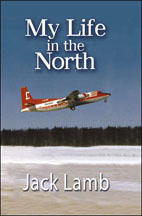
Lambair's history is detailed in the autobiography of Jack Lamb, "My Life in the North".


The youngest of the six flying Lamb brothers, Conrad Lamb has written his memoirs of living and working in northern Canada. "From Tractor Train to Bush Plane" is a series of stories about Conrad and his adventures while aiding in the development of the north.

In 1984, Pulitzer Prize winning author Leland Stowe published a biography of Tom Lamb called The Last Great Frontiersman. The book was based on a series of taped interviews (available on this website) with Tom Lamb prior to his death and with family members after. The book is out of print.
 Hilda Lamb Herbert was the middle daughter and middle child of THP and Caroline Lamb. The sister of Tom and Gladys (Billie), Hilda writes about her life growing up in remote northern Manitoba  In The Lambs of Moose Lake.

Gladys Lillian Lamb Allan also known as Billie documented her family’s early life at Moose Lake Manitoba in the book “Dew Upon the Grass”. This book is out of print.

And the BHS Norseman is featured here:

Loading Image
The slogan Tom and his pilot sons went by was: "Do not ask us where we fly . . . Tell us where you want to go"

Here is also my father's photo of the Norseman he remembered unloading supplies at Oxford House, MB in 1946. And look at the license letters on the side: BHS!


Here is probably how it looked when my mother and I rode on it in December 1946 [photo from Lambair website]:


Photographed ca. 1954, from Jack Lamb via Bill Ewing, it looks like it is being overhauled:


 Here is, I believe, Tom himself with it in Grand Rapids, or a different one - Lambair had 6 of them: MK4 CF-FUU Leased, MK5 CF-MAM snN29 26, MK5 CF-BHS snN29-7 1945, MK6 CF-GUQ, MK6 CF-INN and MK6 CF-ILR [photo from my father]


Here it is on some remote northern lake with a Husky and a Bell helicopter [photo from Lambair website]:


And finally, here's my photo of BHS 22 yrs later as I finally saw it again in Meadow Lake SK, in 1968.


And, finally, it’s last resting place [photos from the Thompson tourism website]:


Here’s another version of the story behind that:

A dedicated group of volunteers worked evenings and weekends for over two years to restore this crashed Norseman float plane that lay in the swamp near Garden Hill, Manitoba since 1969.  The rusty shell was rescued and brought to life in Thompson under the supervision of Fred Palmer and Marion Morberg. The plane, now fully restored sits atop a 14-ft tall pedestal in the Thompson Lions Club Park and is part of Thompson's Spirit Way walkway.   
Norseman float planes were the only such planes built in Canada.  These workhorses were critical in the development and evolution of Northern Canada.  Their unique three bladed prop and fabric skin made them legendary.  Only a few still fly today. 
Dedicated pilots in the North risked their lives to move supplies and people across the wide expanse of Northern Manitoba tundra and boreal forest.  
This stunning site pays tribute to the pilots, mechanics and support staff in northern aviation. 
Location:
Mystery Lake Road, right before the Miles Hart Bridge.

Website:


Lorne Brandt, acknowledging these photos, except for the ones my father took in Oxford House and Grand Rapids and the one I took in Meadow Lake are all 'borrowed' and can be found on the internet as cited.
2015 8 26